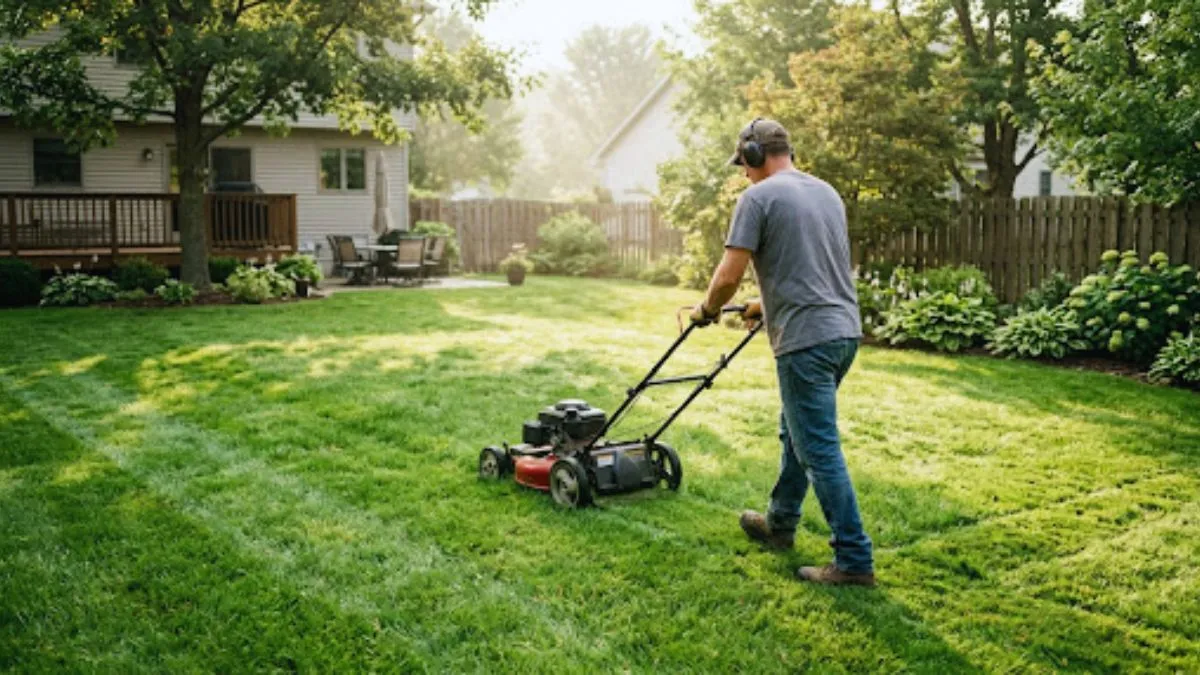
How often you should mow your lawn depends on more than the day of the week. Grass type, weather, season, sunlight, soil moisture, and how quickly the lawn is growing all affect when it is time to cut.
For most homeowners, mowing about once a week during active growth is a useful starting point. But that schedule can change quickly. A lawn growing rapidly in spring may need mowing twice a week, while grass under heat or drought stress may need much less attention.
The better rule is simple: mow based on grass height and growth, not the calendar.
The One-Third Rule Makes Mowing Easier
One of the most useful rules for lawn care is to avoid removing more than about one-third of the grass blade at a time.
If your grass normally stays around 3 inches tall, you should mow before it reaches roughly 4.5 inches rather than allowing it to become very tall and cutting it back dramatically.
Removing too much at once can stress the grass. It can also leave the lawn looking thin or brown because the plant suddenly loses a large portion of its leaf surface.
This is why a fixed schedule such as mowing every Saturday does not always work. If the grass is growing slowly, mowing every week may remove very little. During a period of rapid growth, waiting a full week could allow the lawn to become overgrown.
Watching the height of the grass gives you a much better signal.
How Often Should You Mow in Spring?
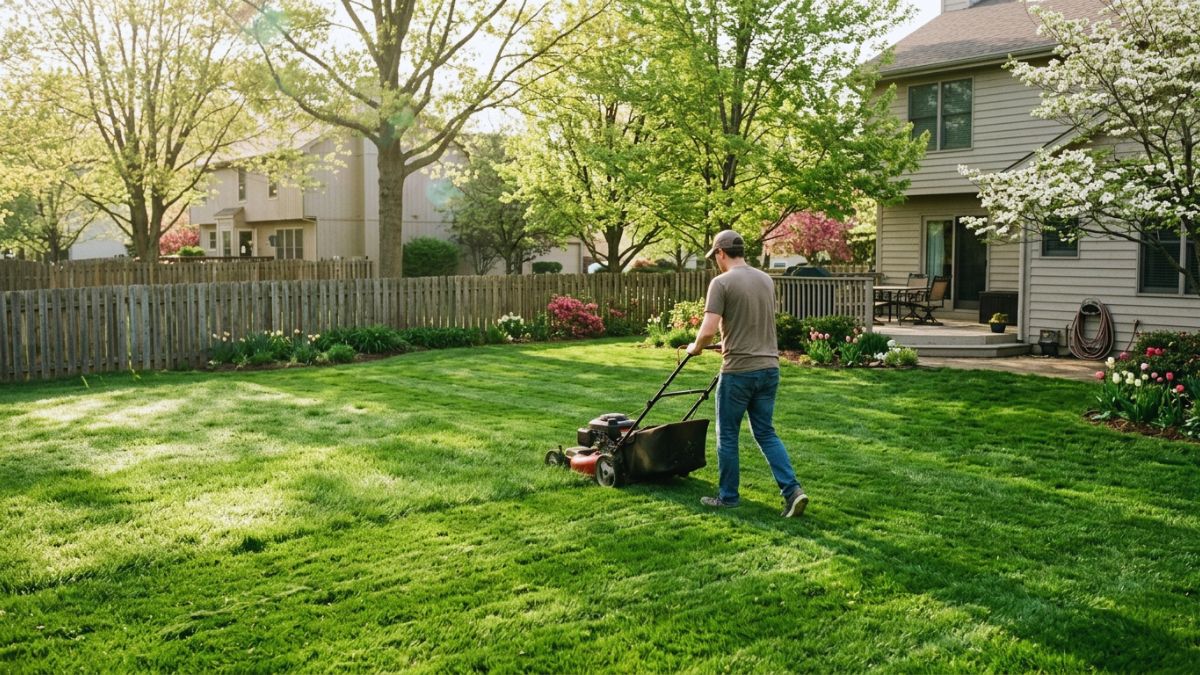
Spring is often one of the busiest mowing seasons, especially when temperatures, rainfall, and soil moisture create ideal growing conditions.
Cool-season grasses such as Kentucky bluegrass, tall fescue, perennial ryegrass, and fine fescues can grow vigorously during favorable spring weather. In some lawns, that means mowing about once a week, while fast growth may require cutting every four to five days.
Warm-season grasses behave differently. Bermudagrass, zoysiagrass, centipedegrass, and St. Augustinegrass become increasingly active as temperatures rise.
The important thing is not to force every lawn onto the same spring mowing schedule. A shaded fescue lawn in a cool climate may grow very differently from a sunny Bermudagrass lawn in the Southeast.
If the grass has reached your preferred mowing height and is approaching the point where removing more than one-third would be necessary, it is time to mow.
Summer Mowing Requires More Attention
Summer can make mowing more complicated because grass growth depends heavily on temperature and available water.
When conditions are warm and moisture is adequate, some warm-season grasses can grow quickly. Bermudagrass, for example, may need frequent mowing during periods of strong growth.
But a lawn experiencing drought or extreme heat is a different situation.
Grass that is already stressed may not benefit from frequent mowing. Cutting drought-stressed grass aggressively can add another source of stress and leave the lawn more vulnerable.
During hot weather, check the lawn before starting the mower. If the grass is growing slowly, there may be no reason to maintain the same mowing frequency you used during a rainy period.
Sharp mower blades also matter during summer. A dull blade tends to tear the grass instead of making a clean cut, which can leave the lawn looking ragged.
Should You Mow Your Lawn Every Week?
For many lawns, weekly mowing works well during active growth. But “once a week” should be treated as a convenient guideline, not a requirement.
A lawn growing rapidly after regular rainfall may need to be cut more often. A lawn growing slowly during dry weather may go longer between cuts.
There is also a difference between maintaining a lawn and simply keeping it short.
Frequent mowing at the correct height can encourage a consistent appearance without repeatedly removing too much leaf tissue. In contrast, allowing grass to become very tall and then cutting it extremely short can create unnecessary stress.
The goal is not to mow as often as possible. The goal is to keep the grass within a healthy height range.
What Happens If You Let Grass Grow Too Tall?
Waiting too long between mowing sessions can create its own problems.
When grass becomes significantly taller than its normal height, the next mowing may remove far more than one-third of the blade. That can expose lower portions of the plant to sunlight and change the appearance of the lawn almost immediately.
Very tall grass can also become difficult to cut evenly. The mower may struggle, clippings can become excessive, and the lawn may look uneven after mowing.
If your grass has become seriously overgrown, resist the temptation to cut it extremely short in one pass.
Instead, gradually reduce the height over multiple mowing sessions. This takes longer, but it is generally less stressful than removing a large portion of the grass at once.
Does Grass Type Change How Often You Should Mow?
Yes. Grass species have different growth patterns and preferred mowing heights, so the ideal mowing frequency varies across the United States.
Cool-season grasses are common in much of the northern United States and generally grow most actively during cooler portions of the year. Tall fescue, Kentucky bluegrass, and perennial ryegrass are examples.
Warm-season grasses are more common across the South and parts of the transition zone. Bermudagrass, zoysiagrass, centipedegrass, and St. Augustinegrass are examples.
Even within the same grass type, mowing frequency can vary. A lawn receiving plenty of sunlight, water, and nutrients may grow much faster than grass growing beneath trees.
That is why two lawns in the same neighborhood can require different mowing schedules.
How Often Should You Mow a Newly Seeded Lawn?
Newly seeded grass needs a little more care because the young plants are still developing.
You generally want the seedlings to become established before mowing, but you should not allow the grass to become excessively tall before the first cut.
The exact timing depends on the grass species and the recommended establishment height. Once the seedlings are tall enough to mow safely, use a sharp blade and avoid removing too much at once.
The soil should also be firm enough that the mower will not create ruts or disturb the developing plants.
For newly established lawns, mowing correctly is part of helping the grass develop into a denser stand rather than simply controlling height.
Should You Mow Wet Grass?
Mowing wet grass is usually best avoided when possible.
Wet blades can clump together, making it harder to achieve an even cut. Moist soil can also be more vulnerable to compaction or tire damage, especially with heavier riding mowers.
There are situations when homeowners have little choice because of weather and a narrow mowing window. But when possible, waiting until the grass has dried gives you better mowing conditions.
Dry grass is also easier for many mowers to cut and distribute evenly.
How High Should You Keep Your Lawn?
There is no single mowing height that works for every lawn.
The correct height depends on the grass species, climate, season, and growing conditions. Some grasses perform better when kept relatively short, while others benefit from being maintained taller.
As a general principle, slightly taller grass often provides more leaf area for photosynthesis and can help shade the soil surface. But keeping grass excessively tall is not automatically better either.
The best approach is to identify your grass species and follow a mowing height appropriate for that particular lawn.
This becomes especially important when comparing lawns in different parts of the United States. A mowing height that works well for Bermudagrass in the Southeast may not be appropriate for a tall fescue lawn farther north.
Mowing Frequency Can Tell You Something About Your Lawn
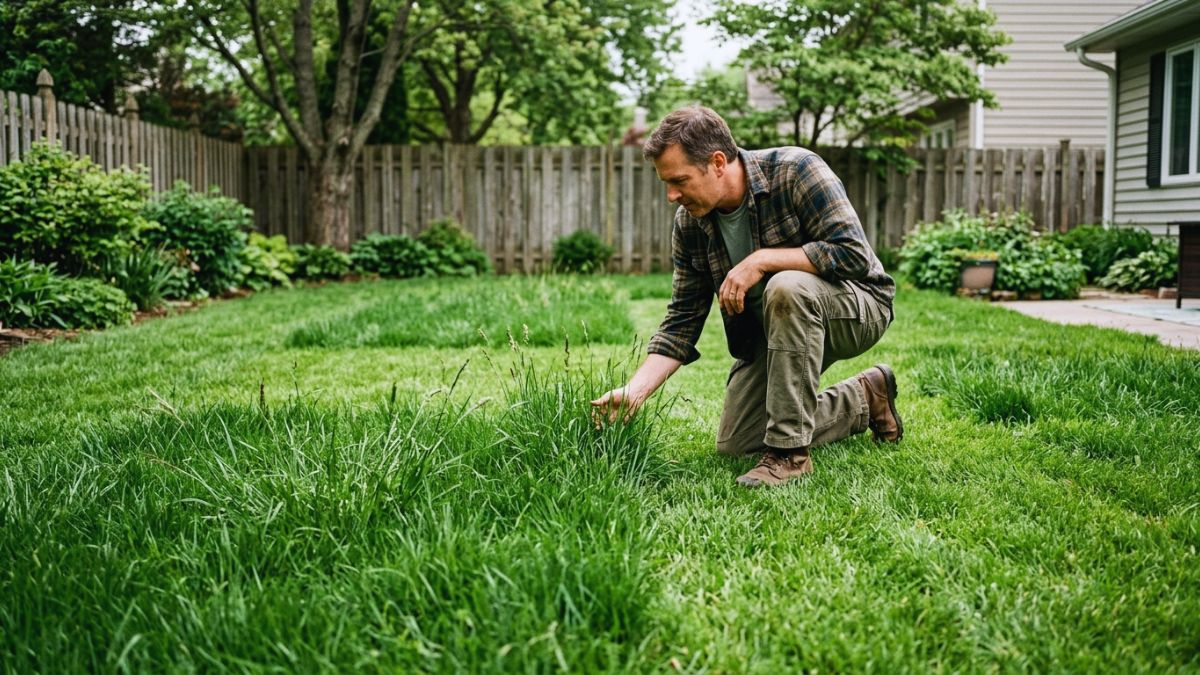
How quickly grass grows can actually provide useful information about what is happening in your yard.
Rapid growth may be associated with favorable temperatures, rainfall, irrigation, sunlight, and available nutrients. Slow growth may occur because of drought, excessive shade, temperature stress, poor soil conditions, or seasonal dormancy.
That means mowing is not just a maintenance task. It can also be a way to observe your lawn.
If one section suddenly grows much faster than another, for example, you may notice differences in sunlight, irrigation, soil moisture, or fertility.
Likewise, if the entire lawn slows down during a period of extreme heat, reducing mowing frequency may be more appropriate than trying to maintain the same weekly schedule.
The Best Mowing Schedule Is Based on Growth
For most homeowners, starting with weekly mowing during active growth is reasonable. But the lawn itself should determine whether that schedule needs to change.
Check the height before mowing. Consider recent rainfall and irrigation. Look at the weather. Pay attention to whether the grass is actively growing or showing signs of heat or drought stress.
Then follow the one-third rule and avoid removing too much of the blade in a single cut.
A healthy lawn does not need to be mowed simply because it is Saturday. It needs to be mowed when the grass has grown enough to require cutting.
Once you start using grass height instead of the calendar as your main guide, lawn mowing becomes much easier to manage—and your grass is less likely to suffer from unnecessary stress.