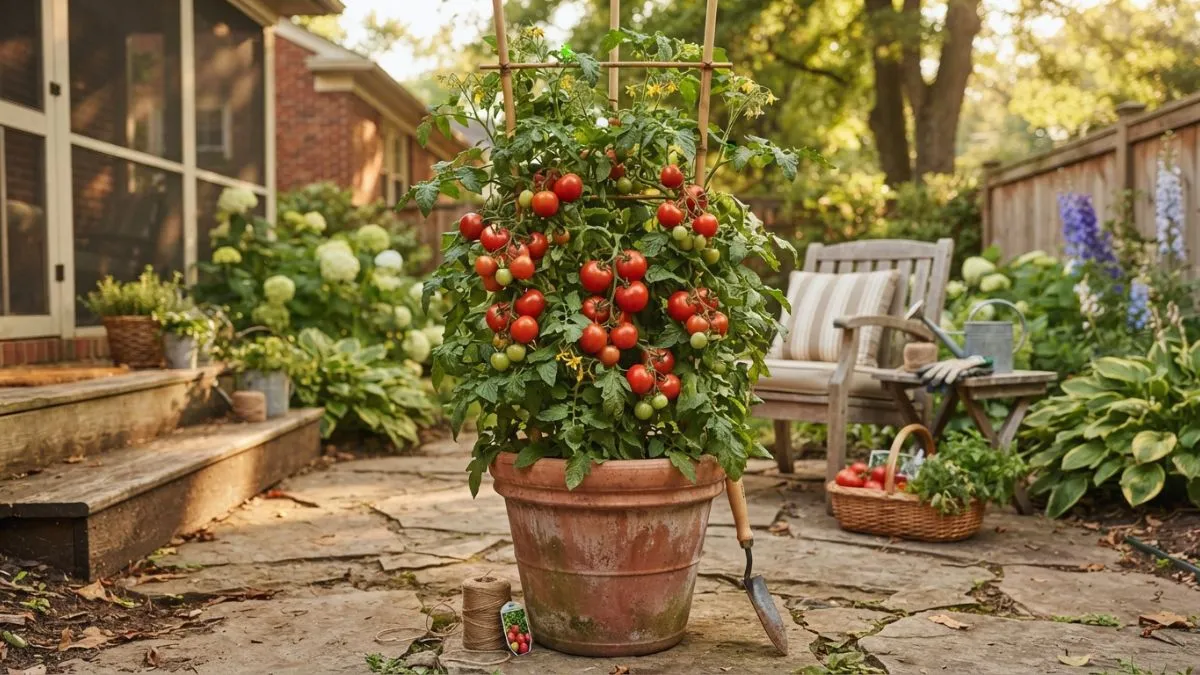
Growing tomatoes in pots is a practical option when you do not have a traditional garden. A sunny patio, balcony, deck, or small backyard can provide enough space for a productive tomato plant. The key is giving the plant enough root space, sunlight, water, nutrients, and support from the beginning.
Tomatoes can grow vigorously in containers, but a small pot, poor drainage, inconsistent watering, or the wrong variety can quickly limit production. Choosing the right setup before planting makes a noticeable difference once the plant begins flowering and setting fruit.
Choose the Right Tomato Variety
Not every tomato plant has the same growth habit, and that matters when growing in a container.
Determinate tomatoes grow to a more limited size and produce much of their crop within a relatively short period. Many compact and patio varieties are well suited to pots because they do not continue extending indefinitely.
Indeterminate tomatoes keep growing and producing throughout the season when conditions remain favorable. They can also grow quite large, which means they need a larger container and stronger support. They can work in pots, but they require more attention than compact varieties.
When buying plants or seeds, look for descriptions such as “patio,” “compact,” “dwarf,” or “container-friendly.” These terms can help you find varieties that fit a limited growing space without assuming that every tomato will behave the same way.
Use a Large Enough Pot
The container needs to provide enough room for the tomato's root system. A pot that looks convenient on a balcony may become a problem once the plant grows.
For most full-sized tomato plants, a container holding at least 5 gallons of growing medium is a useful starting point, while larger plants often benefit from 10 gallons or more. Compact varieties may perform well in smaller containers, depending on the specific variety.
Depth matters as well as volume. Tomato roots need room to develop below the plant, and a shallow container can dry out quickly.
Every container should have drainage holes. Excess water needs a way to leave the pot because roots sitting in saturated soil have less access to oxygen and are more vulnerable to root problems.
Use Potting Mix Instead of Garden Soil
Garden soil is usually not the best choice for a container tomato. Once placed inside a pot, ordinary garden soil can become compacted and drain poorly.
Use a quality potting mix designed for containers. The growing medium should hold enough moisture for the roots while still allowing excess water to drain.
Avoid filling the container with heavy soil from the yard. A tomato growing in a pot depends entirely on the limited growing medium around its roots, so its physical structure matters throughout the season.
Do not place a thick layer of gravel at the bottom of the container as a substitute for drainage. What matters is having drainage holes and a suitable growing medium throughout the pot.
Give Tomatoes Plenty of Sun
Tomatoes need strong sunlight to grow and produce fruit. Place the container where the plant can receive around six to eight hours of direct sunlight each day.
A balcony or patio can receive very different amounts of sunlight depending on its direction, surrounding buildings, trees, and railings. Check the location before planting rather than assuming that a bright-looking space receives enough direct light.
Too little sunlight can produce a weak, stretched plant with reduced flowering and fruit production. In very hot regions of the United States, intense afternoon heat can create a different problem. Containers can become extremely hot and dry, so plants may need closer attention to water during periods of high temperature.
Water Tomatoes Consistently
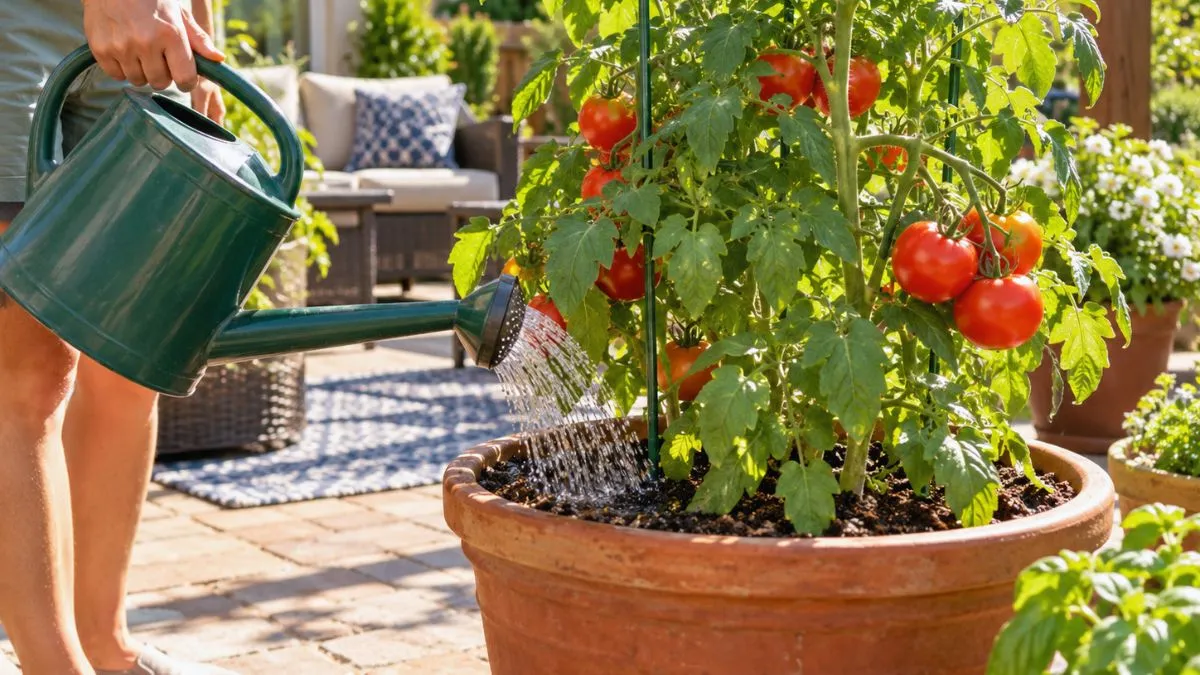
Watering is one of the most important parts of growing tomatoes in pots because containers have a limited supply of moisture.
Check the potting mix with your finger before watering. If the upper portion feels dry, water thoroughly until some water drains from the bottom of the container. This helps moisten the full root zone rather than only the surface.
Do not rely on a fixed schedule such as watering every two or three days throughout the entire season. Weather, pot size, plant size, sunlight, and temperature all affect how quickly the container dries.
During hot summer weather, a mature tomato plant in a container may need water much more frequently than a young plant in spring. Small containers can dry especially fast.
Try to keep moisture reasonably consistent. Allowing a tomato plant to become severely dry and then soaking it can contribute to problems such as blossom-end rot and fruit cracking.
Feed the Plant as It Grows
A tomato in a container has access to a limited amount of nutrients. Unlike a plant growing in a large garden bed, its roots cannot extend into surrounding soil when nutrients become depleted.
Use a fertilizer suitable for container vegetables and follow the application rate on the label. The nutrient needs of the plant change as it grows, so feeding should be based on the product instructions and the plant's stage of development.
Avoid assuming that more fertilizer means more tomatoes. Excess nitrogen can encourage vigorous leaf and stem growth while delaying or reducing fruit production.
Once the plant begins producing flowers and fruit, maintaining steady nutrition becomes particularly important. If the foliage looks unusually dark and lush but flowers and fruit remain limited, excessive nitrogen may be part of the problem.
Support the Plant Before It Gets Large
Tomato plants can become heavy quickly, especially when fruit begins developing.
Install a tomato cage, stake, or other support when planting or while the plant is still small. Waiting until the stems are large can make supporting the plant more difficult and can damage roots if a stake has to be forced deeply into the container later.
The type of support should match the variety. A compact determinate plant may need only a modest cage, while an indeterminate tomato can require a taller and stronger structure.
As the plant grows, guide the stems into the support instead of allowing the entire plant to lean over the edge of the pot.
Why Tomato Plants Have Flowers but No Fruit
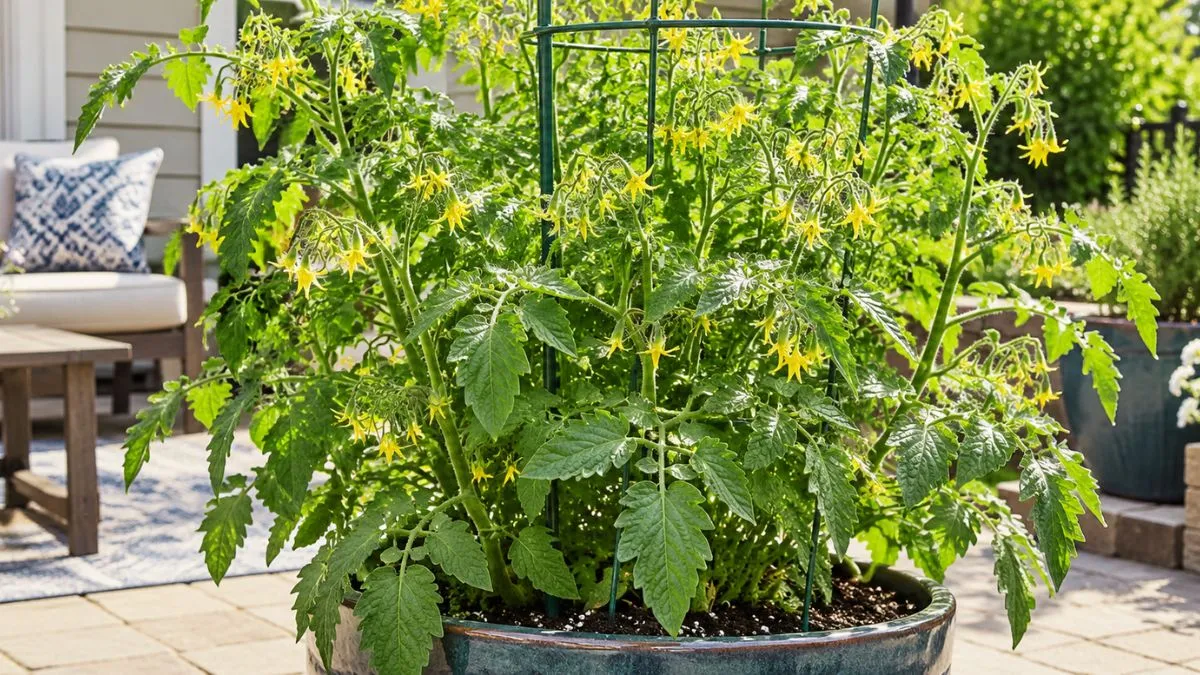
A tomato plant can look healthy and produce flowers without producing tomatoes. Temperature is one common reason.
Tomatoes set fruit best when temperatures are within a moderate range. Very high daytime temperatures or unusually cool nights can interfere with pollination. This is particularly relevant in parts of the southern United States where summer heat can arrive early.
Tomatoes are self-pollinating, but they still benefit from movement that helps release pollen within the flower. Outdoor plants usually receive this from wind and insects. On a sheltered balcony, gently shaking the flower clusters can help distribute pollen.
Water stress can also affect flowering and fruit development. A plant that repeatedly dries out may have difficulty maintaining consistent growth and fruit production.
Growing Tomatoes in Pots Across the United States
Container growing gives gardeners more control over the plant's environment, but climate still matters.
In hot areas such as parts of Texas, Arizona, Florida, and the Southeast, containers can dry rapidly during summer. Light-colored containers or larger pots can help reduce extreme root-zone temperatures and slow moisture loss.
In cooler northern states, the shorter growing season makes variety selection and planting time more important. A compact, early-producing variety may have a better chance of producing a useful crop before cold weather arrives.
In areas with humid summers, good air circulation around the plant can help foliage dry after rain or irrigation. Keeping the leaves as dry as practical and avoiding crowded placement can reduce conditions that favor some fungal diseases.
The same basic principles apply across the country, but watering frequency, planting dates, and variety choice should match the local climate.
Harvest Tomatoes When They Are Ready
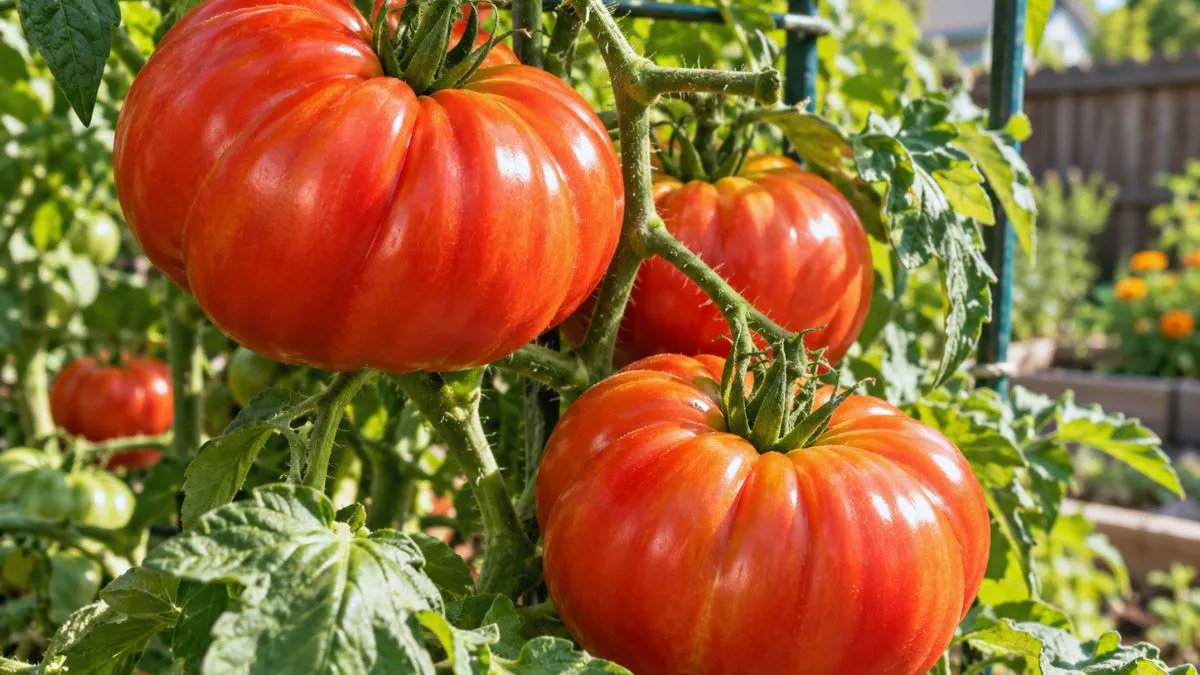
Tomatoes do not need to remain on the plant until they are completely soft to be ready for harvest. Depending on the variety, mature fruit usually develops its characteristic color and begins to soften slightly.
Harvesting ripe or nearly ripe fruit regularly also reduces the weight hanging from the plant and gives the plant room to continue producing.
If extreme heat, frost, or another weather problem threatens the crop, mature green tomatoes can sometimes be harvested and allowed to ripen indoors. Keep them at room temperature rather than placing unripe tomatoes in the refrigerator.
Growing tomatoes in pots works best when the container is treated as the plant's entire growing environment. The pot needs enough room for the roots, the growing medium needs good drainage, and the plant needs steady access to sunlight, water, nutrients, and physical support. Get those conditions right from the beginning, and even a patio or balcony can produce a surprisingly productive tomato plant.