Potted tomato plants usually need water every day during hot summer weather, but the right amount depends on the container size, temperature, sunlight, and stage of growth. A small pot sitting in full sun may dry out within hours, while a large container in mild weather can hold enough moisture for longer. The best approach is to water deeply whenever the plant needs it, rather than following a rigid schedule.
Tomatoes grown in containers depend on you for a steady supply of moisture. Unlike garden soil, potting mix has a limited amount of space to store water, and excess moisture can drain through the holes at the bottom. Understanding how quickly your pot dries out can help prevent wilting, blossom-end rot, and other problems that affect tomato growth and fruit quality.
How Often Should You Water Tomatoes in Pots?
Most potted tomato plants need watering once a day during warm weather, and some may need water twice a day during heat waves. In cooler conditions, watering every two or three days may be enough. These are starting points, not fixed rules, because the soil in each container dries at a different rate.
A tomato growing in a five-gallon container on a sunny patio may need more frequent watering than one growing in a larger pot with partial afternoon shade. Wind also speeds up moisture loss, particularly on balconies and exposed decks.
Check the potting mix before watering. Insert your finger about an inch or two below the surface. If the mix feels dry at that depth, it is usually time to water. If it still feels moist, check again later instead of adding more water automatically.
As your plant grows, its roots and leaves use more moisture. A young transplant may need less water than a mature tomato covered in foliage and developing fruit. During peak summer heat, checking containers in the morning and again in the afternoon helps you catch pots that dry out unusually quickly.
How Much Water Does a Potted Tomato Plant Need?
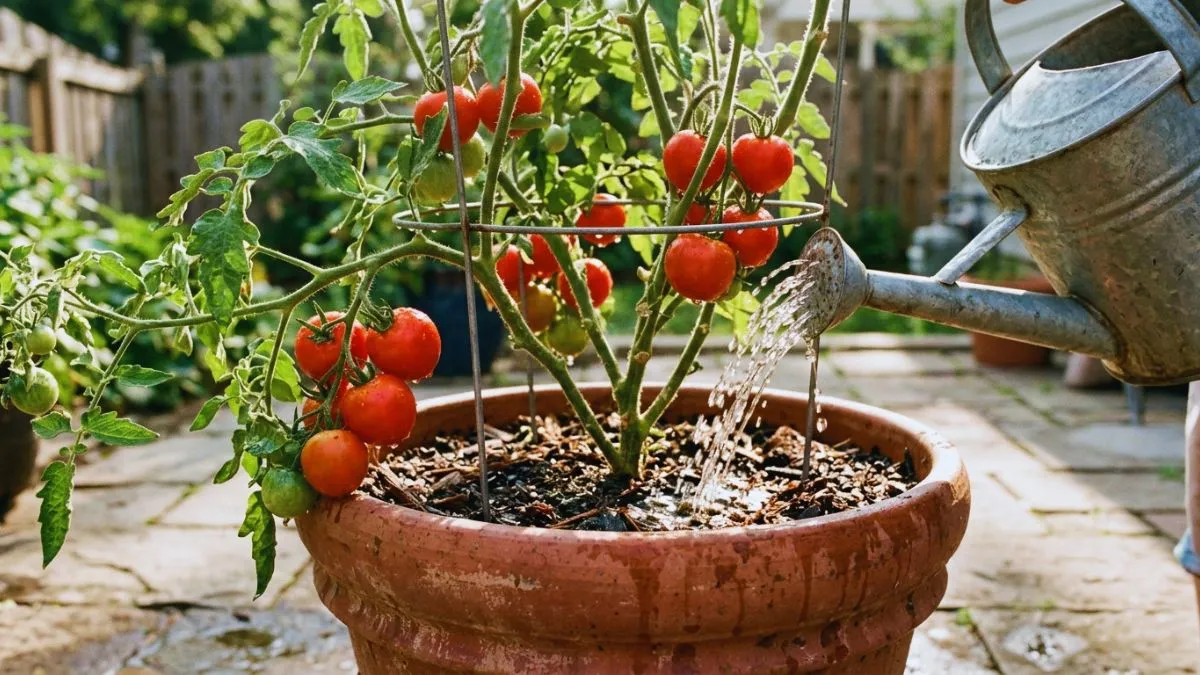
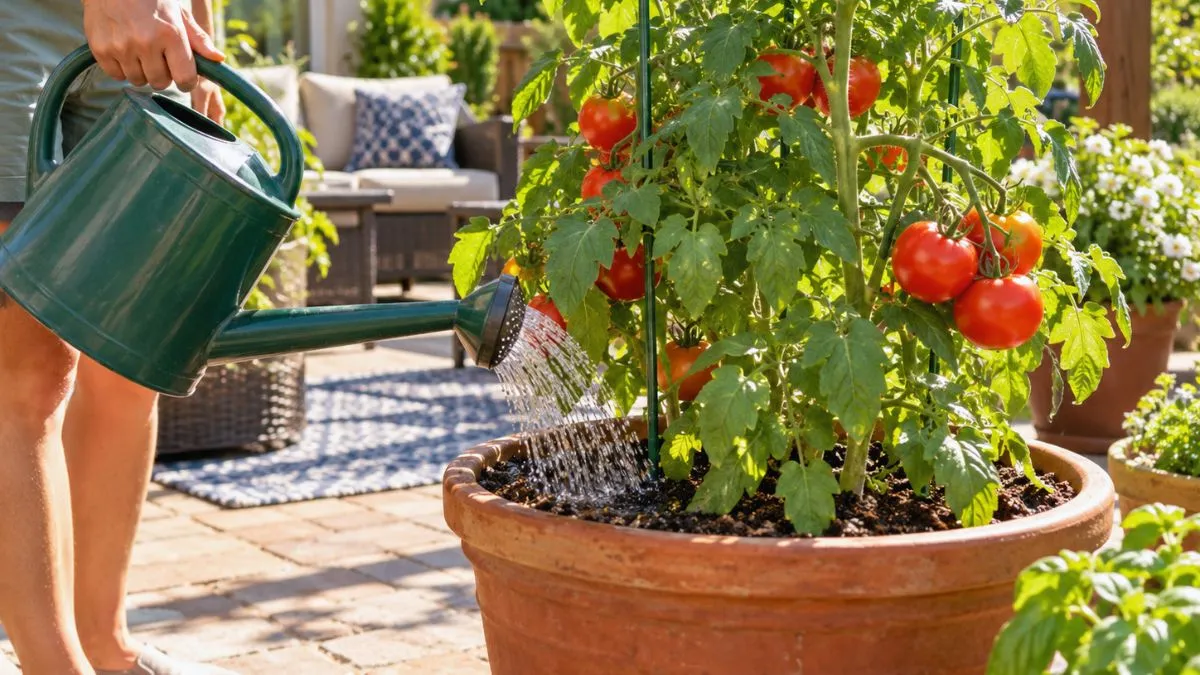
There is no single number of cups or gallons that works for every tomato plant. A practical rule is to add water slowly until the potting mix is thoroughly moist and a little water begins to drain from the bottom. This helps wet the root zone instead of leaving the upper layer damp while the lower mix stays dry.
For a medium-sized container, this may take several cups of water, while a large pot can require considerably more. The amount will change as the plant grows and temperatures rise. Rather than measuring every watering, pay attention to how much your particular container holds and how quickly it dries afterward.
Apply water directly to the soil around the base of the plant. Pour slowly so the potting mix has time to absorb moisture. If water immediately runs down the sides and out of the drainage holes, the mix may have become too dry to absorb water evenly. Apply a small amount first, wait a few minutes, and then water again until the root zone is thoroughly moistened.
Always use containers with drainage holes. Without proper drainage, excess water can collect around the roots, reducing the oxygen they need and increasing the risk of root rot.
Why Consistent Watering Matters for Tomato Size
Tomatoes need a steady supply of water to move nutrients through the plant, maintain healthy leaves, and support fruit development. When the soil repeatedly dries out and then becomes saturated, the plant experiences unnecessary stress.
One common problem is blossom-end rot, which appears as a dark, sunken patch on the bottom of developing tomatoes. Although it resembles a calcium deficiency, it is often associated with difficulty moving calcium into the fruit as a result of inconsistent moisture, rapid growth, or other environmental factors. Adding calcium without addressing watering problems may not solve the issue.
Fluctuating moisture can also contribute to fruit cracking. After a dry period, a tomato may absorb water rapidly when the soil becomes wet again. The fruit can expand faster than its skin can stretch, causing splits around the stem or along the sides.
Consistent watering cannot prevent every fruit problem, but it helps create more stable growing conditions. During flowering and fruit development, pay particular attention to containers that dry out quickly.
Does the Weather Change How Much Water Tomatoes Need?
Temperature and sunlight have a major effect on how often potted tomatoes need water. During a mild spring week, a container may remain moist for several days. Once summer temperatures climb into the 90s Fahrenheit, the same pot may dry out in a single afternoon, especially in direct sunlight.
Dark-colored containers can become particularly warm in full sun, heating the potting mix and increasing moisture loss. Wind can make the problem worse even when the air does not feel especially hot.
In hot U.S. regions, including parts of Texas, Arizona, and the Southeast, daily watering checks are especially important during summer. Gardeners in cooler northern states may need to water less frequently in spring and early fall, although sunny patios can still dry containers quickly.
If your schedule allows, water early in the morning. This gives roots access to moisture before the hottest part of the day. If a container becomes dry again by late afternoon, give it another check and water if needed. Avoid watering solely because the leaves look droopy at midday; heat can temporarily cause wilting even when the soil still contains enough moisture.
How to Tell If Your Tomato Plant Needs More or Less Water
A thirsty tomato plant may develop limp leaves, drooping stems, or dry potting mix. The container may also feel noticeably lighter when lifted. If the soil is dry and the plant is wilting, water thoroughly and check whether it recovers.
Overwatering can produce similar symptoms. Roots deprived of oxygen may struggle to absorb water, leaving leaves yellow or wilted even when the mix is wet. A persistently soggy container, unpleasant-smelling soil, or water that drains poorly suggests a drainage or watering problem.
Check soil moisture before deciding what to do. If the mix is dry, water it. If it is saturated, allow excess moisture to drain and let the upper layer begin to dry before watering again. Do not leave the pot standing in a saucer full of water.
A layer of organic mulch on the potting mix can slow evaporation and reduce temperature swings. Keep the mulch slightly away from the main stem, and make sure it does not prevent you from checking the soil.
The Best Way to Keep Potted Tomatoes Properly Watered
Choose a container large enough for the tomato variety, use a quality potting mix, and make sure excess water can escape. Many full-sized tomato plants perform well in containers holding at least five gallons, although larger containers generally provide a bigger moisture reserve and more room for roots.
Check soil moisture every morning during the growing season, increasing checks when temperatures rise or strong winds are expected. Water deeply when needed instead of giving the plant frequent, tiny splashes that may not reach the lower roots.
The goal is not to keep the potting mix constantly soaked. It is to maintain even moisture while allowing air to reach the roots. Once you learn how quickly your container dries under your local weather conditions, watering becomes easier to manage.
For healthier potted tomato plants, let the soil—not the calendar—guide your decisions. A consistent routine of checking moisture, watering thoroughly, and ensuring good drainage will give your plants a better chance of producing firm, flavorful tomatoes throughout the season.