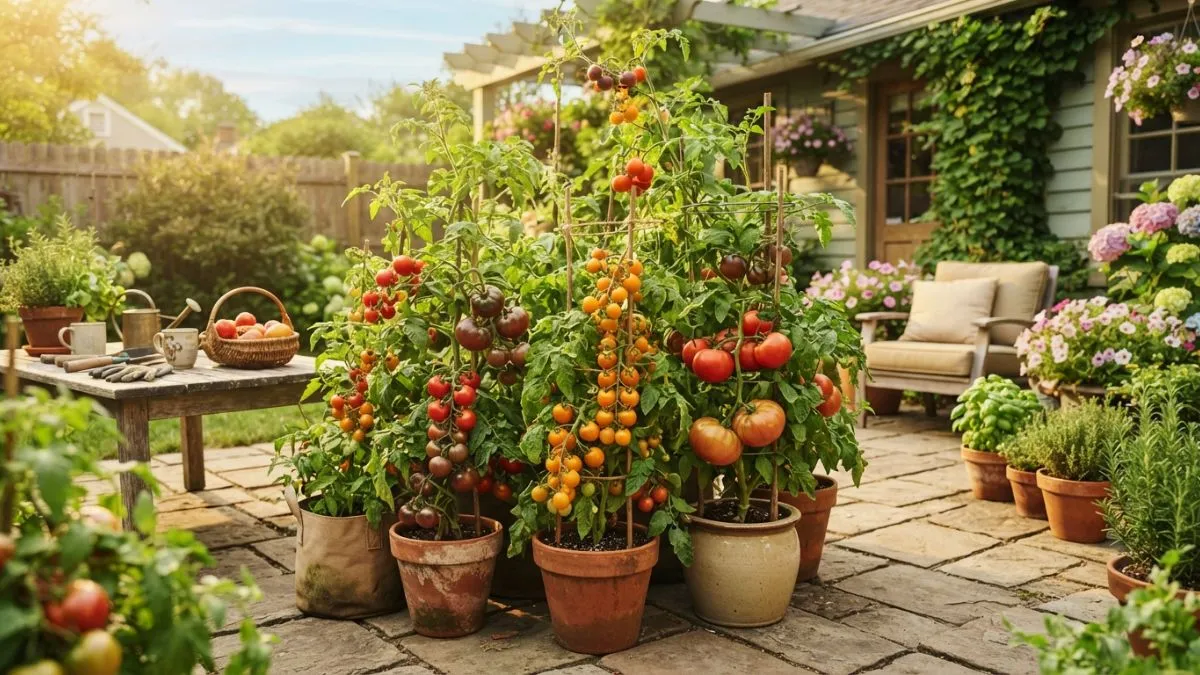
The best tomatoes for pots are not necessarily the largest or most productive varieties. For container gardening, a tomato plant needs to match the space available. Compact growth, manageable height, early production, and a strong ability to produce fruit without a large garden bed can make a variety much easier to grow in a pot.
Some tomatoes stay relatively small and fit comfortably on a patio or balcony. Others grow into large vines but can still perform well in a container when given enough root space and a strong support system. Choosing the variety before choosing the pot can prevent many of the problems that appear later in the season.
What Makes a Tomato Variety Good for Containers?
Tomatoes grown in containers have less root space than plants growing in the ground. The size and growth habit of the plant therefore matter.
Determinate tomatoes tend to stop growing once they reach their mature size. They often produce much of their crop within a concentrated period, making them practical for gardeners who want a manageable plant.
Indeterminate tomatoes continue producing new stems and fruit while growing throughout the season. They can produce a large harvest, but they need more space, more support, and usually a larger container.
Dwarf and compact varieties are particularly useful for balconies, patios, and small decks. Their smaller plants can still produce full-sized or cherry tomatoes without requiring the extensive support that a large indeterminate variety needs.
1. Patio Princess
Patio Princess was developed with container growing in mind, making it a natural choice for gardeners working with limited space.
The plant remains relatively compact while producing medium-sized red tomatoes. Its manageable growth makes it suitable for a large pot on a patio, deck, or balcony.
This type of tomato is especially useful for gardeners who want a traditional slicing tomato without growing a sprawling vine.
2. Tiny Tim
Tiny Tim is one of the smallest tomato varieties commonly grown in containers. Its compact habit makes it suitable for smaller pots and limited growing spaces.
The plants produce small red cherry-type tomatoes and generally remain much shorter than standard tomato plants.
Because of its size, Tiny Tim can work particularly well where a full-sized tomato cage would be impractical. It can also be useful for gardeners who want to grow tomatoes in a small outdoor space.
3. Tumbling Tom
Tumbling Tom has a trailing growth habit that makes it different from upright patio varieties.
Instead of growing as a traditional tall tomato plant, its stems can cascade over the edge of a container. This makes it useful for hanging baskets and elevated containers where the plant has room to trail downward.
The variety produces small tomatoes and can create a productive container display without requiring a conventional garden bed.
4. Bush Early Girl
Bush Early Girl combines an earlier harvest with a more compact growth habit than the standard Early Girl tomato.
The plant produces medium-sized tomatoes and can work well in containers when given adequate space and support.
Its earlier production can be useful in areas with shorter growing seasons because gardeners do not have to wait as long for the first ripe fruit.
5. Celebrity
Celebrity is a popular tomato variety known for producing medium to large fruit and a relatively compact growth habit compared with many indeterminate tomatoes.
Although it is not a tiny patio tomato, it can be grown in a large container. The plant benefits from strong support because the fruit can add considerable weight to the stems.
For gardeners with a sunny patio and room for a substantial pot, Celebrity can provide a useful balance between plant size and fruit size.
6. Sungold
Sungold is an indeterminate cherry tomato known for its sweet orange fruit.
The plant can become large, so it is not the easiest choice for a small balcony. In a large container with a sturdy cage, stake, or trellis, however, it can produce a long season of fruit.
Its vigorous growth means gardeners should plan for support before the plant becomes large. Regular harvesting can also help keep the plant productive throughout the season.
7. Roma
Roma tomatoes can be grown in containers when the pot is large enough and the plant receives strong sunlight.
The fruits are commonly used for sauces, cooking, and preserving because they have a relatively firm texture and less juice than many slicing tomatoes.
Compact Roma types are particularly useful for containers. When choosing seeds or transplants, check the variety's mature size rather than assuming every Roma tomato will stay small.
8. Celebrity Plus
Celebrity Plus is another option for gardeners who want larger tomatoes without choosing a highly sprawling plant.
It can work in a large container, provided the plant has enough root space and a sturdy support structure.
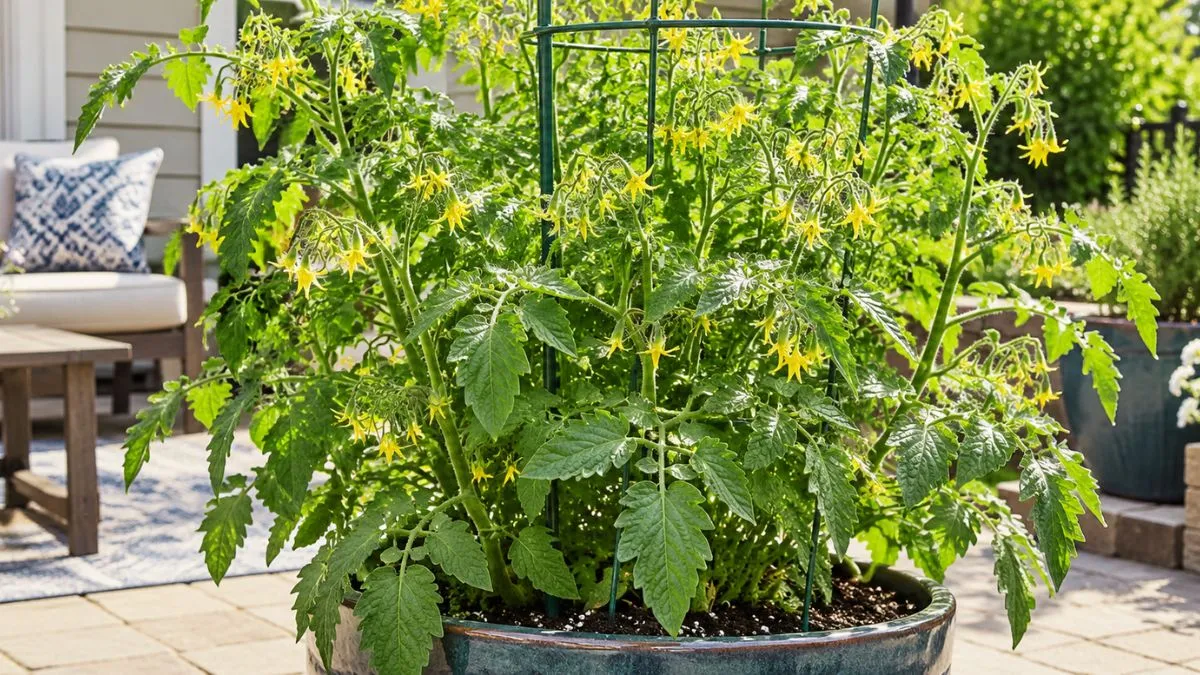
This type of tomato is better suited to a spacious patio or backyard container setup than to a small balcony where every inch of growing space matters.
9. BushSteak
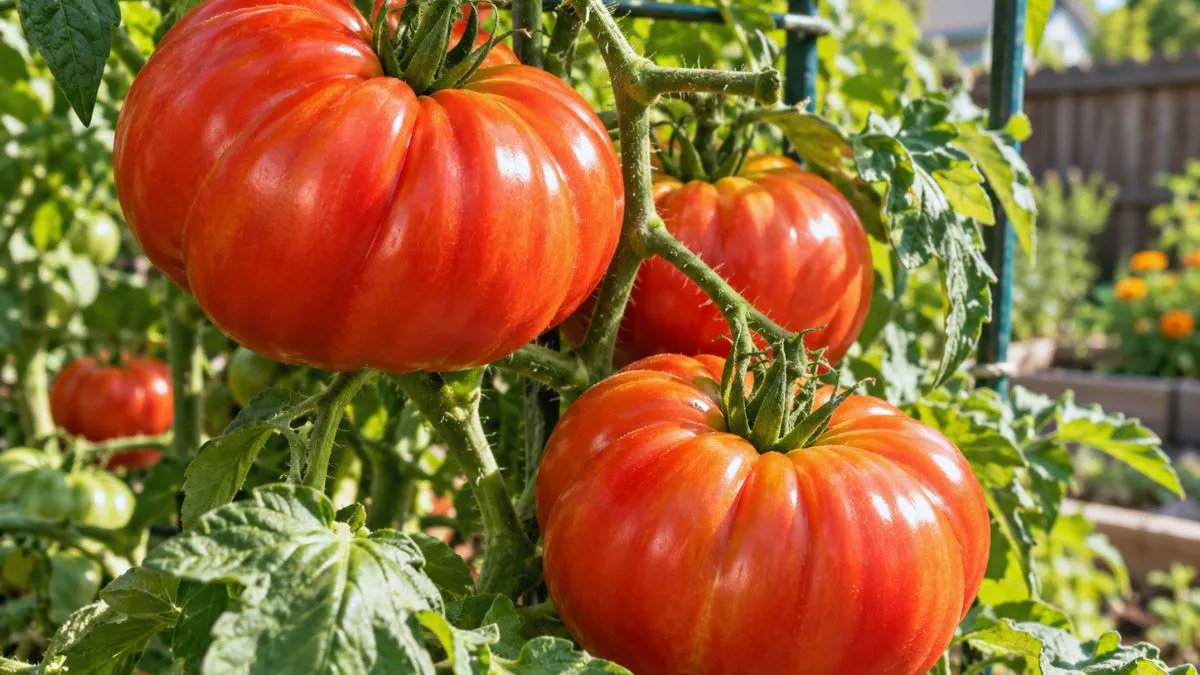
BushSteak is designed to produce large beefsteak-type tomatoes on a more compact plant.
Large-fruited tomatoes place considerable demands on a container plant. The pot needs to be large enough to support the root system, and the plant needs reliable watering and sturdy support.
For gardeners who want a large tomato from a container rather than a small cherry variety, a compact beefsteak type can be worth considering.
10. Sweet 100
Sweet 100 is an indeterminate cherry tomato that can produce a heavy crop of small, sweet fruit.
It requires more space than compact patio tomatoes, but its productivity makes it attractive for gardeners with a large container and enough vertical room.
Because the vines can become long, a tall cage or trellis is useful. It is a better choice for a spacious patio than for a very small container garden.
How Large Should the Pot Be?
The variety determines how much space the plant needs.
A very compact tomato may grow successfully in a smaller container, while vigorous indeterminate varieties generally need a much larger pot. For many full-sized tomato plants, a container of at least 5 gallons is a practical starting point, while large indeterminate varieties often perform better with 10 gallons or more.
The container should also have drainage holes. A large pot without adequate drainage can create more problems than a smaller pot with a suitable growing medium and proper drainage.
When in doubt, give a vigorous tomato more root space rather than trying to restrict it to a container that is clearly too small.
Which Tomato Is Best for a Small Balcony?
For a small balcony, compact varieties such as Tiny Tim or Patio Princess are generally easier to manage than vigorous indeterminate tomatoes.
The available sunlight matters just as much as the variety. A compact tomato still needs strong direct sunlight to produce a good crop.
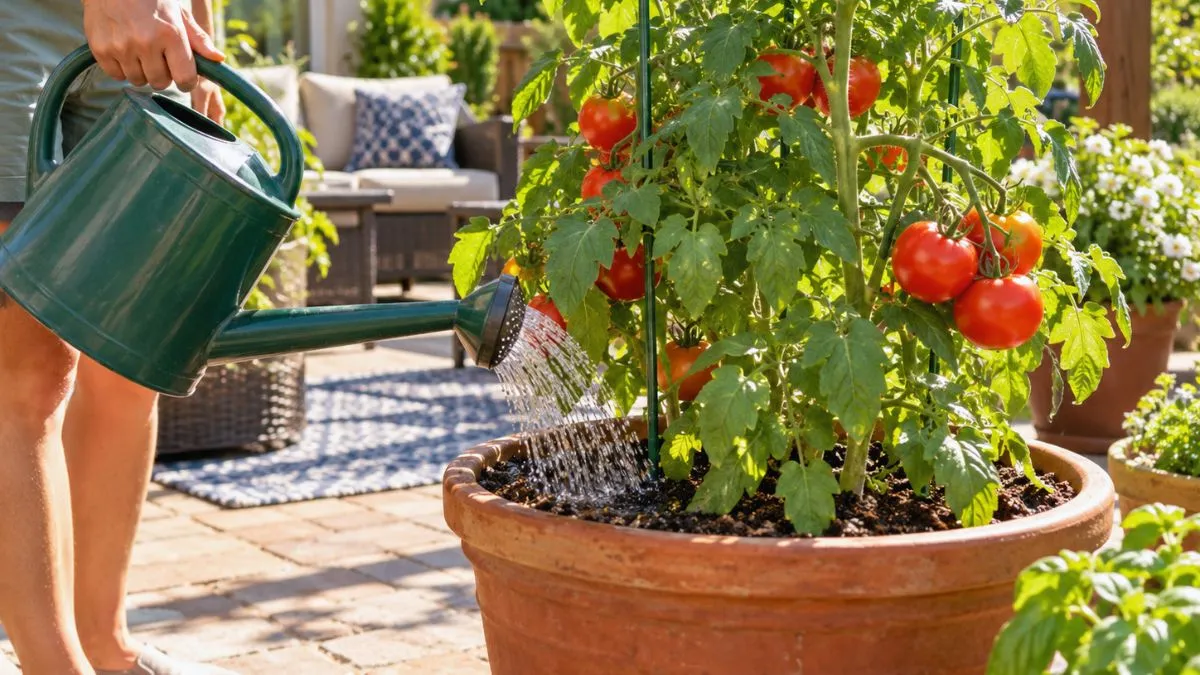
Balconies can also heat up quickly, especially when surrounded by concrete, glass, and walls. Containers may dry faster than they would in a backyard, so the gardener needs to check the potting mix regularly during hot weather.
Which Tomato Is Best for a Large Patio?
A large patio gives you more flexibility. A spacious container can support varieties such as Sungold, Sweet 100, Celebrity, or BushSteak when the plant receives enough sunlight and has adequate support.
For these larger plants, think vertically. A strong cage or trellis allows the plant to use the available space above the container instead of spreading across the patio.
The larger the plant, the more attention it will usually require. Water consumption increases as the foliage expands, and heavy fruit can place substantial weight on branches.
How Many Tomato Plants Should Go in One Pot?
One tomato plant per container is usually the safest approach.
Tomatoes need access to water, nutrients, sunlight, and root space. Planting several vigorous plants in the same pot creates competition and makes it harder to provide enough resources to each plant.
Even compact varieties can benefit from having their own container when the goal is healthy growth and consistent fruit production.
Choosing the Right Tomato for Your Climate
The best container tomato also depends on where you garden in the United States.
In areas with very hot summers, a variety that produces early may have an advantage because extreme heat can interfere with fruit set. In northern states with shorter growing seasons, early-maturing varieties can help gardeners harvest before the first fall frost.
In humid regions, give the plant enough space for air movement around its foliage. In dry climates, container size becomes particularly important because a larger volume of growing medium generally provides more moisture than a small pot.
Your local planting date matters too. A tomato variety that performs well in one part of the country may need a different planting schedule in another.
Choosing a Tomato You Can Actually Manage
The best tomato for a pot is ultimately the one that matches the space you have.
A compact patio tomato makes sense when the container needs to fit on a small balcony. A vigorous cherry tomato can be a better choice when you have a large patio and enough vertical space for a trellis. A compact beefsteak type can satisfy gardeners who want larger fruit without committing to a full-sized garden bed.
Before buying a transplant, check its mature size and growth habit. Then choose the container, support, and location around the needs of that specific plant. That simple match between variety and growing space can make container tomato gardening much easier and give the plant a better chance of producing fruit throughout the season.