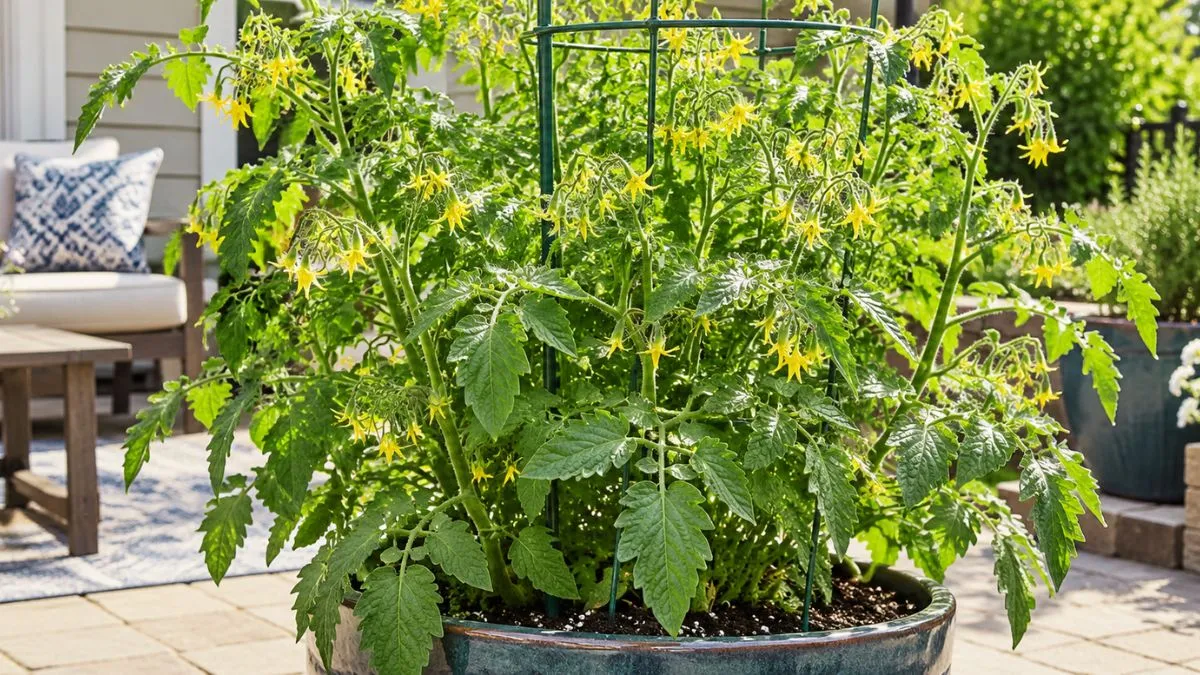
A tomato plant can look healthy, grow plenty of leaves, and produce clusters of yellow flowers without setting a single tomato. When that happens, the problem is often not a lack of fertilizer. Temperature, pollination, sunlight, watering, and excessive plant growth can all affect whether flowers develop into fruit.
For container-grown tomatoes, these problems can appear quickly because the plant depends entirely on the conditions inside and around its pot. A container that dries out repeatedly, sits in poor light, or becomes extremely hot can put enough stress on the plant to interfere with fruit production.
The first step is to look at what the plant is doing before changing anything. A flowering tomato plant that has no fruit needs a different solution from one that is not flowering at all.
The Most Common Reason: Temperature
Temperature is one of the biggest factors affecting tomato fruit set.
Tomatoes generally set fruit best when daytime temperatures are moderate and nighttime temperatures are not too cold. Very high temperatures can interfere with pollination, while cold nights can slow the process as well.
This is particularly relevant in warmer parts of the United States. During periods of intense summer heat, a tomato plant may continue producing flowers but drop those flowers before fruit develops.
The plant may look vigorous and green, which can make the problem confusing. The flowers are present, but the conditions are not favorable for them to develop into tomatoes.
When temperatures become extreme, keeping the plant adequately watered and protecting the container from excessive heat can reduce stress. Once temperatures return to a more suitable range, new flowers may begin setting fruit normally.
The Flowers May Not Be Getting Pollinated
Tomato flowers contain both male and female reproductive parts, so a single plant can produce fruit without needing another tomato plant nearby.
However, the pollen still needs to move within the flower. Outdoor plants receive help from wind, insects, and movement caused by weather.
A tomato grown on a sheltered balcony may receive less natural movement than one growing in an exposed garden. If flowers are opening but not producing fruit, gently shaking the flower clusters can help release pollen.
You can do this by lightly tapping the main stem or flower cluster during the middle part of the day when the flowers are open. There is no need to shake the entire plant aggressively.
Good air movement around the plant can also help. Avoid placing several large tomato plants so close together that their foliage forms a dense wall.
Too Much Heat Can Cause Blossom Drop
Blossom drop occurs when flowers develop but fall from the plant without producing fruit.
High temperatures are a common cause, especially when hot days are combined with warm nights. Container plants can experience even more heat because the potting medium and container itself can become very warm.
A tomato plant sitting against a hot wall or on a surface that absorbs intense afternoon sunlight may experience more root-zone heat than a plant in a garden bed.
During extreme heat, providing some protection from the harshest afternoon conditions can help. The plant still needs plenty of direct sunlight overall, so the goal is to reduce extreme heat rather than keep the plant in shade.
Your Tomato May Not Be Getting Enough Sun
Tomatoes need strong sunlight to produce flowers and fruit.
If a plant receives only a few hours of weak or filtered light, it may produce less fruit even when the foliage looks healthy. Buildings, fences, trees, and neighboring plants can block direct sunlight during parts of the day.
For container tomatoes, this is easier to correct because the pot can sometimes be moved.
A location that receives around six to eight hours of direct sunlight is generally suitable for productive tomato growth. In very hot climates, however, intense afternoon conditions may require some protection during the hottest part of the day.
The balance is important: too little light can reduce flowering and production, while extreme heat can cause flowers to drop.
Inconsistent Watering Can Interfere With Fruit Set
Tomatoes in containers can become dry much faster than tomatoes growing in the ground.
When the potting mix repeatedly becomes very dry and then receives a large amount of water, the plant experiences unnecessary stress. During flowering, that stress can interfere with fruit development.
Check the growing medium regularly rather than following a rigid watering calendar. When the upper portion becomes dry, water thoroughly until excess water drains from the container.
A larger pot can help maintain more consistent moisture because it contains more growing medium. Small containers may need much more frequent attention, particularly during hot weather.
Keeping moisture reasonably consistent is more useful than simply giving the plant more water.
Too Much Nitrogen Can Encourage Leaves Instead of Fruit
A tomato plant with huge amounts of dark green foliage but very few flowers may be receiving too much nitrogen.
Nitrogen encourages vegetative growth, which means stems and leaves. Tomatoes also need other nutrients for flowering and fruit development.
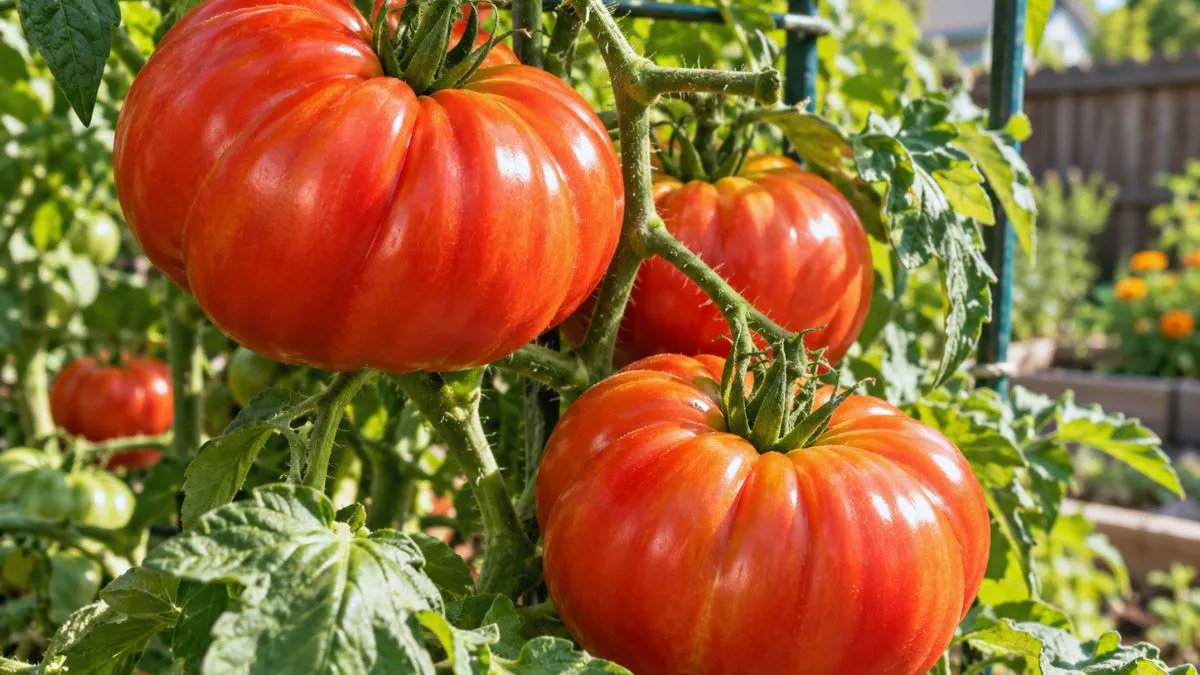
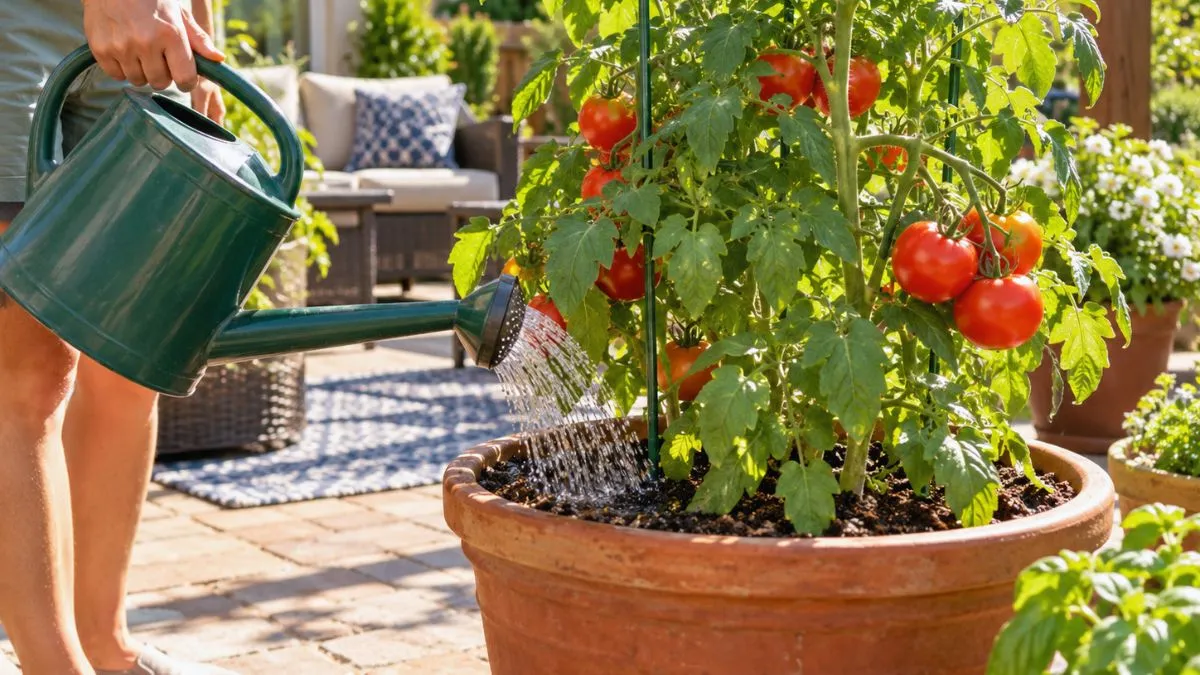
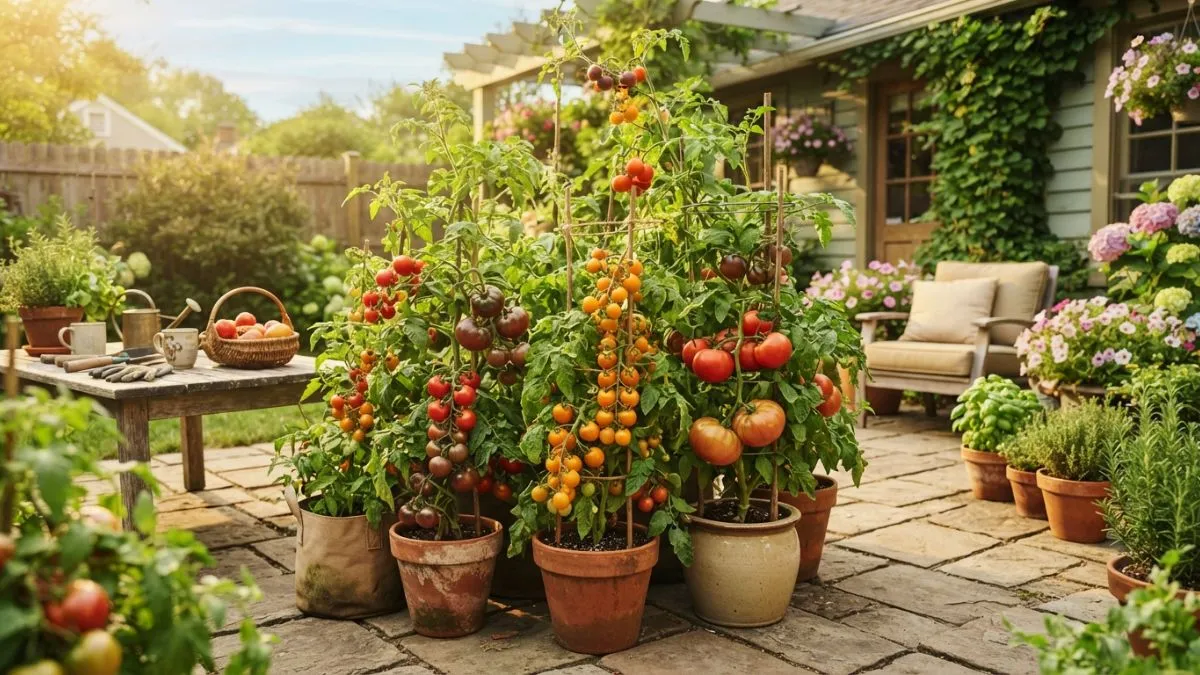
This does not mean nitrogen is bad for tomatoes. The plant needs it. The problem occurs when fertilizer is applied excessively or when a high-nitrogen product is used repeatedly without considering the plant's overall nutrient needs.
If the plant is extremely leafy but barely flowering, stop adding extra fertilizer until you can determine whether nutrients are actually needed. Follow the fertilizer label rather than increasing the amount because the plant appears to be growing slowly.
The Plant May Be Too Young
Some tomato plants simply need more time.
A recently transplanted tomato may spend a period developing roots and adapting to its new environment before producing flowers. A small plant should not be expected to produce a heavy crop immediately after planting.
Transplant shock can also temporarily slow flowering. Give the plant stable moisture, adequate sunlight, and appropriate nutrition while it establishes itself.
Once the plant begins growing steadily and reaches maturity, flowering should become more consistent.
Pruning May Be Creating a Problem
Pruning can help manage some tomato plants, but removing too much foliage can create unnecessary stress.
Leaves are responsible for photosynthesis, which provides the energy the plant uses for growth and fruit production. Removing large amounts of healthy foliage can reduce the plant's ability to support developing fruit.
The right approach depends on the variety. Determinate tomatoes generally need less pruning, while indeterminate varieties may be trained or pruned to control growth.
If your tomato plant is already struggling to flower or set fruit, avoid aggressive pruning unless there is a specific reason to remove a stem or leaf.
The Container May Be Too Small
A tomato plant can outgrow its container.
When roots become crowded, the plant may have difficulty maintaining adequate access to water and nutrients. A small container also dries out much faster than a larger one.
This becomes more noticeable as the plant gets larger. A pot that was sufficient for a young transplant may no longer provide enough growing medium once the plant is carrying a large amount of foliage.
For many full-sized tomatoes, a container holding at least 5 gallons is a useful starting point. Vigorous indeterminate varieties often benefit from 10 gallons or more.
The exact requirement depends on the variety, but a large plant in a very small pot is rarely an easy combination.
What If the Plant Has Lots of Flowers but No Tomatoes?
When flowers appear but fruit does not, start by checking temperature and pollination.
Look at the recent weather. If the plant has been exposed to unusually high daytime temperatures or very warm nights, heat may be responsible for the failed fruit set.
Then look at the growing conditions. Is the plant receiving enough direct sunlight? Is the container drying out every day? Is the plant receiving excessive nitrogen? Is it growing in a sheltered location with very little air movement?
These questions are more useful than immediately adding fertilizer or calcium.
When Should You Expect Tomatoes to Form?
Once a flower is successfully pollinated, a small green tomato should begin developing behind the flower.
If the flower dries up and falls away while no small fruit forms, the flower likely did not set.
Do not judge the entire season based on one group of flowers. Tomato plants can produce several rounds of flowers, and a period of unfavorable weather may affect one round while later flowers develop normally.
This is especially common during heat waves. A plant may stop setting fruit temporarily and begin again when temperatures become more favorable.
How to Get a Potted Tomato Plant Producing Again
Start with the basics. Give the plant enough direct sunlight, keep the potting mix consistently moist without leaving it saturated, and make sure the container is large enough for the variety.
If temperatures are extreme, reduce heat stress where possible. If flowers are opening without fruit, gently shake the flower clusters to encourage pollen movement.
Avoid adding fertilizer unless the plant actually needs it, and do not remove large amounts of healthy foliage in an attempt to force fruit production.
Most importantly, give the plant time. Tomato fruit production is closely tied to weather and plant growth, and a temporary period without fruit does not necessarily mean the plant is failing.
When the temperature, moisture, light, and pollination conditions improve, new flowers can set fruit. A healthy tomato plant that produces leaves and flowers still has the potential to produce a good crop later in the season.