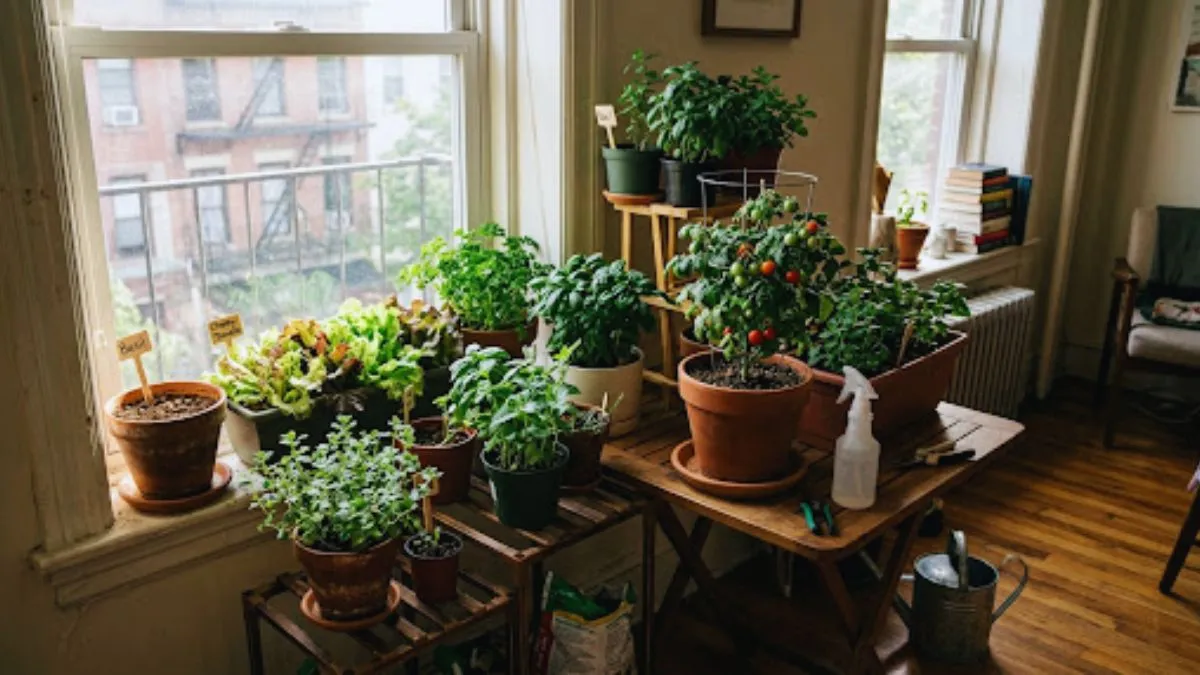
Starting a garden in an apartment does not require a backyard, a raised bed, or even a balcony. A sunny window, a few containers, good potting mix, and the right plants can be enough to grow fresh herbs, leafy greens, and even compact vegetables at home.
The biggest mistake beginners make is choosing plants before figuring out how much light their apartment actually receives. Once you understand your available light and choose plants that fit the space, apartment gardening becomes much easier.
Start With the Light You Have
Before buying seeds or containers, spend a day looking at where sunlight enters your apartment.
A south-facing window usually provides the strongest indoor light, making it one of the best locations for plants that need several hours of direct sun. East-facing windows can work well for herbs and leafy greens because they receive gentler morning sunlight. West-facing windows receive stronger afternoon light, while north-facing windows often provide the least direct sunlight.
Your window does not need to be perfect to start gardening, but your plant choices should match the conditions.
Tomatoes, peppers, and other fruiting plants generally need much more light than lettuce, spinach, or many herbs. Trying to grow a sun-loving tomato in a dark corner is one of the fastest ways to become frustrated with apartment gardening.
If your apartment does not receive enough natural light, a small LED grow light can make a significant difference. This is particularly useful during winter or in apartments surrounded by taller buildings.
Choose Plants That Fit a Small Space
A small apartment garden works best when you grow plants that give you something useful without taking over the room.
Herbs are an excellent starting point. Basil, parsley, chives, cilantro, oregano, thyme, and mint can all be grown in containers, although mint is better kept in its own pot because it can become difficult to contain.
Leafy greens are another practical choice. Lettuce, arugula, baby kale, and spinach can produce harvests without requiring the vertical space that larger vegetables need.
Compact vegetables can also work. Radishes are particularly useful for small spaces because they mature quickly and do not require a large container. Green onions can be grown in relatively shallow pots, and dwarf or patio tomato varieties can work when you have enough sunlight.
The key is not trying to grow everything.
A few healthy plants that you can actually care for are far more useful than a crowded collection of containers struggling for light.
Pick Containers Based on the Plant
You do not need expensive gardening pots to start.
Almost any clean container can work if it is appropriate for the plant and has adequate drainage. The container should allow excess water to escape through holes in the bottom. Without drainage, water can accumulate around the roots and create conditions that encourage root problems.
Container depth matters, too.
Lettuce and many herbs can grow in relatively shallow containers, while tomatoes and other larger plants need substantially more room for their roots. A small pot may look convenient on a windowsill, but putting a large, fast-growing plant into it can create watering problems and restrict root development.
For apartment gardening, it is often better to choose fewer, appropriately sized containers than dozens of tiny pots.
A saucer beneath each container can protect your windowsill, floor, or furniture from excess water. Just remember to empty standing water when necessary rather than allowing the pot to sit in it continuously.
Use Potting Mix Instead of Backyard Soil
One of the easiest ways to improve an apartment garden is to start with the right growing medium.
Garden soil from outdoors is usually not the best choice for containers. It can become compacted inside a pot, reducing air movement around the roots and making drainage more difficult.
A quality commercial potting mix is designed specifically for container growing. It generally provides the combination of moisture retention and drainage that plants need in a confined root environment.
This matters even more indoors because containers do not have the natural drainage and soil ecosystem available in an outdoor garden bed.
When filling a container, avoid packing the mix down aggressively. A loose growing medium gives roots room to develop and allows water to move through the container more evenly.
Learn How Your Containers Dry Out
Watering is one of the most important skills for a new apartment gardener.
There is no universal schedule that works for every plant or every apartment. A container near a hot, sunny window can dry much faster than one sitting several feet away from a cooler window.
Instead of watering because it is Tuesday or because a plant looks slightly different, check the growing medium.
Push your finger into the soil and feel the moisture below the surface. If the plant's growing medium is still damp, it may not need more water. If the surface and the root zone are becoming dry, it is usually time to water thoroughly.
Small containers can dry out quickly, especially during hot weather or when indoor heating and air conditioning reduce humidity.
At the same time, constantly wet soil can be just as problematic as dry soil. Good container gardening is about maintaining consistent moisture without leaving the roots saturated.
Give Your Plants Enough Airflow
Apartment gardens can sometimes become crowded because every available windowsill seems like a potential growing space.
Resist the temptation to place plants directly against each other.
Air movement helps leaves dry after watering and creates a less favorable environment for some common plant problems. Crowded foliage also makes it harder to inspect plants for insects or signs of disease.
A small fan can provide gentle air movement if your indoor garden is particularly dense, although you do not need strong airflow blowing directly at the plants.
Simply giving each plant enough space can make maintenance easier.
Fertilize Carefully
Plants grown in containers eventually use nutrients from their growing medium, so feeding may become necessary as the season progresses.
That does not mean more fertilizer will produce better plants.
Overfertilizing can damage roots and create excessive leafy growth at the expense of the growth you actually want. This is particularly relevant with vegetables such as tomatoes, where fertilizer should support balanced growth rather than simply pushing the plant to produce more leaves.
Start by following the fertilizer label for the plant you are growing. If you are using a commercial potting mix that already contains fertilizer, you may not need to feed immediately.
For herbs and leafy greens, modest feeding is often sufficient. Fruiting plants such as tomatoes and peppers may have greater nutritional demands as they grow and produce flowers and fruit.
Watch for Pests Before They Become a Problem
Indoor gardening does not mean your plants are automatically protected from insects.
Aphids, fungus gnats, spider mites, and other pests can occasionally appear indoors. New plants brought home from a garden center can be one source, but pests can also arrive through open windows or on other plants.
Check the undersides of leaves regularly, especially if a plant suddenly stops growing or develops distorted, yellowing, or spotted foliage.
Catching a problem early is much easier than dealing with an infestation that has spread across an entire windowsill.
Keeping new plants separated from established plants for a short period can also make it easier to notice potential problems before they spread.
Know When Your Apartment Garden Needs More Light
One of the clearest signs of insufficient light is weak, stretched growth.
A plant may lean toward the window, develop unusually long stems, produce smaller leaves, or grow much more slowly than expected.
This does not always mean the plant is unhealthy in every respect. It may simply be trying to reach more light.
Moving it closer to a brighter window can help, provided the location is appropriate for that plant. If natural sunlight is still insufficient, adding a grow light can make indoor growing considerably more reliable.
This is especially important if you want to grow tomatoes, peppers, or other plants that need strong light to flower and produce fruit.
Start Small and Expand Slowly
The best apartment garden is not necessarily the biggest one.
Starting with three or four containers gives you an opportunity to learn how quickly your space dries out, how much sunlight reaches your plants, and how much time you actually want to spend maintaining them.
You might discover that basil grows exceptionally well in your kitchen window while lettuce performs better elsewhere. You may also learn that one sunny window is enough for herbs but not enough for the tomato variety you wanted to grow.
Those observations are useful.
Apartment gardening becomes much easier when you work with your space instead of trying to force a traditional backyard garden into it.
Once you understand your light, containers, watering habits, and available space, you can gradually add more plants.
The Best Apartment Garden Is One You Will Use
Starting a small garden in an apartment is less about having a perfect setup and more about making good decisions with limited space.
A sunny windowsill can produce fresh basil for cooking. A shallow container can provide several harvests of baby greens. A larger pot can support a compact tomato plant when the conditions are right.
You do not need a backyard to experience the satisfaction of growing something yourself.
Start with the light you have, choose plants that match your conditions, use containers with good drainage, and pay attention to what your plants are telling you. A small apartment garden can become surprisingly productive when every container has a purpose.